What Does "Good Posture" Contribute to Our Lives? Understanding Dynamic Posture
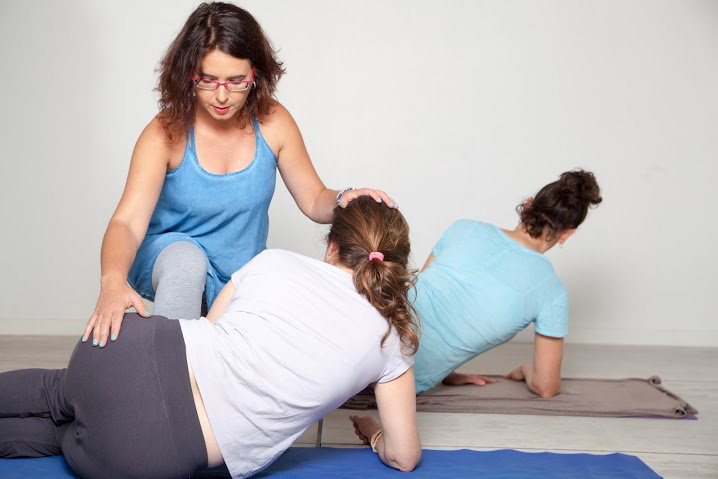
By: Rinat LevinThe most constant fact in life is that everything changes. To understand the concept of "Dynamic Posture," let’s begin with an exercise designed for two. You will need a partner and a pen and paper to record your findings.
A. Rating the Posture
Instruct your partner to stand in the most comfortable and natural way for them, without changing a thing. Now, look at Illustration 1 (which describes "Correct Posture" based on the laws of mechanics, physiology, and anatomy). Compare your partner’s stance to this ideal posture. Rate it on a scale of 1–10 (10 being excellent, 1 being poor). Describe their posture in words: Is it upright, crooked, convex, shaped like a question mark, straight as a ruler, flexible, springy, or stable?
B. Can Posture Be "Fixed"?
If you could "fix" or improve your partner’s posture, what would you do? Use your hands and verbal instructions to gently guide them. Move different parts of their body so they "fit" the description of an ideal posture. Pay attention to the overall length of the body, the position of the head and shoulders relative to the spine, and the curvature of the neck.Notice the height of the shoulders—are they even? Are they slumped forward or pulled back? Observe the curves of the back—where are they located? How is the pelvis positioned in relation to the head and legs? Check the legs, the weight distribution, and whether they lean on the heels or toes. Once you are satisfied with your "perfect" design, measure how long they can maintain this position. Check if they are still breathing continuously. Do they look comfortable? Notice the amount of effort required to stand still.
C. How Does This Posture Serve Movement?
Ask your partner to stay in that "ideal" posture and begin to walk, run, jump, or look around. Is their movement fluid or fragmented and hesitant? Does it look natural or forced? Is their breath continuous or held?Now, ask them to return to their normal, comfortable stance. You will likely notice that the changes didn't "stick." Each person has characteristic movement patterns—how they sit, shake hands, or run. These are habits acquired over years based on structure, genetics, environment, and self-image. Your posture even changes based on your mood—compare how you sit during a fascinating lecture versus a boring TV show.
Posture from an Anatomical Perspective
Looking at the spine, we see it is not a straight line. It has natural curves: Cervical Lordosis (neck), Thoracic Kyphosis (upper back), Lumbar Lordosis (lower back), and Sacral Kyphosis. These curves allow for vitality and flexibility.The spine consists of 29 vertebrae in an inverted "S" shape, providing stable support without rigidity. The intervertebral discs provide elasticity, acting as shock absorbers. Anatomically speaking, the idea of a "straight" posture is a myth. Attempting to be perfectly straight can actually cause pain and long-term damage.
Posture from a Functional Perspective
In movement, weight shifts and muscle actions change. To live efficiently—to run, dance, or even hug—you cannot remain in a static or "straight" state. In the Feldenkrais method, posture is dynamic. Dynamic posture is the internal organization that allows us to move from one position to another (e.g., from sitting to standing) with minimal effort and no internal resistance. It is the state of being ready for action.
Change Must Come from Within
Experience shows that "imposing" a posture on someone through external instructions doesn't work. It leads to forced, uncomfortable positions and breath-holding.To truly improve posture, one must undergo a gradual internal learning process. The nervous system must integrate new possibilities. Through Feldenkrais lessons—whether group or individual—a person develops an "internal mirror." By the end of a lesson, the body organizes itself into an efficient, comfortable stance that resembles the "ideal" without being forced. This posture is free, effortless, and allows the person to move in any direction they desire with total ease.
About the Author: Rinat Levin holds an M.Sc. in Pharmacology and Physiology. She is an Assistant Trainer and a highly experienced Senior Teacher of the Feldenkrais Method.
